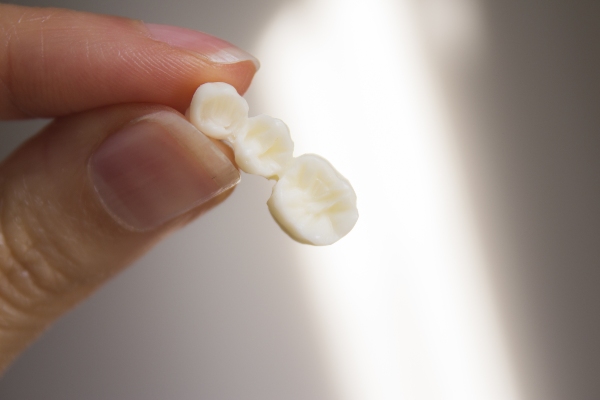
Dental bridge placement will need two visits. The patient will go through a short process that will not be invasive at all. The result will improve the patient’s dental and general health. Knowing the placement process for this restoration can help prepare you for your next visit. Here is the placement process for a dental bridge.
Assessing the mouth
This happens before the placement of the dental bridge. In this visit, the dentist will examine the patient’s mouth. Scans and a physical dental exam will help map out the patient’s mouth. The dentist will see if the patient has other issues like gum disease or jawbone loss as well. Discussing the different types of bridges will follow. This will allow the patient to make informed decisions about the dental bridge placement.
Dental bridge placement, part one
A traditional bridge will need healthy teeth on both sides of the dental gap. The patient who has healthy natural teeth will go through tooth preparation right away. A local anesthetic will numb the target natural teeth. Grinding down a significant portion of their dental structures will come next. This will allow the crowns to fit over the abutment teeth.
Taking impressions of the prepared teeth will follow. The impressions will help the dental lab create custom-fit permanent dental crowns for the abutment teeth. They will also guide the pontics that will fill the dental gap. The dentist will match the color and texture of the crown and pontics with the color and texture of the surrounding natural teeth.
Some patients have healthy gums and jawbones but damaged abutment teeth. Others may not have healthy natural teeth to serve as abutment teeth. This is when the dentist may suggest dental implants for abutment teeth. The process of getting implants will be a lengthy one because of the recovery time involved. While healing, the patient will wear a temporary dental bridge and dental crowns.
Dental bridge placement, part two
The second appointment for dental bridge placement will involve fitting the pontics and dental crowns. A local anesthetic will prevent the patient from having a painful experience. Cementing the crowns in place will follow with the help of a curing light. This light will harden the cement.
Trying the patient’s bite with the pontics and dental crowns on will follow. They may feel bulky at first. The dentist will ask the patient to bite on the treated teeth. The patient may feel strange about the new restorations. But this feeling will pass as the patient adapts to the new restorations. After the final adjustments, the patient can go home with a new, strong smile.
Follow-up visits
The patient must follow the aftercare instructions. Changing the types of food and drinks after getting a dental bridge is necessary while adapting to this type of restoration. The dentist will explain these aftercare steps. These will include proper oral care tips. Proper care and maintenance can make a dental bridge last for a long time.
Your dentist will guide you through the placement of your dental bridge
Dealing with many missing teeth can be extra challenging. The dentist will determine the right type of bridge for you after a thorough evaluation. Discussing these variations can help you make informed decisions about your treatment. Working with your dentist can help prolong the life span of your dental bridge.
Request an appointment or call Grand Valley Dentistry at 616-259-6046 for an appointment in our Allendale Charter Twp office.
Recent Posts
Getting a dental bridge for many missing teeth can renew your dental functions and oral health. It can even give you better self-esteem, knowing that your smile is complete. Your dentist will make sure that your restoration will feel and look natural. Here are the details when it comes to considering a dental bridge for…
Replacing missing teeth preserves the look and function of the smile, and a dental bridge is one of the most versatile ways to do that. Dental bridges are a popular tooth replacement method for numerous reasons. Here is a closer look at the benefits of this restoration and the process for getting one.A dental bridge…
A dental bridge is not a permanent restoration despite the changes that the neighboring natural teeth will go through for the treatment. However, there are different types available, each one capable of meeting your dental needs. Your dentist can present both permanent and removable options. Here are the details on the impermanence of a dental…